Wilderness Systems Recon 120 Review: A Heavy Fishing Kayak That Earned Its Place
I bought the Wilderness Systems Recon 120 because my favorite kayak fishing grounds were too far from the launch to keep grinding out under paddle power alone. After real time on the water, including calm flats, long days, trolling motor use, and rough chop up to about two-foot waves, I can say this kayak has earned its place. It is not light. It is not cheap. But as a stable, motor-ready Gulf Coast fishing platform, it works.

The Practical Problem
The issue is range. My favorite fishing grounds are about two miles from the launch. That does not sound like much until you paddle two miles out, fish hard all day, and then paddle two miles back in wind, tide, heat, or afternoon chop.
My old Wilderness Systems Tarpon 140 treated me well. It was a good paddle kayak, and it got me into kayak fishing. But it was still a paddle-only setup. After enough long days, I realized I was spending too much energy commuting and not enough energy fishing.
In practical terms, I needed a kayak that could handle serious inshore use, carry fishing gear, feel stable enough to stand and sight fish from, and accept a trolling motor without turning the whole setup into a backyard science project.
The Quick Verdict
The Wilderness Systems Recon 120 is an outstanding fishing platform if you understand what it is. It is wide, stable, comfortable, and well suited for a motor-assisted setup. I can stand and sight fish from it in calm water while trolling with my Haswing remote-controlled trolling motor. It has handled rough chop better than I expected, and the seat has been comfortable even after an eight-hour day.
The limitation is transport. Once the battery, motor, gear, and mount are added, this is a heavy rig. I highly recommend using a trailer and launching at a boat ramp whenever possible.
How I Ended Up Here
It started with my wife and me just wanting to be out on the water together. We picked up two used Wilderness Systems boats for a great price: a Tarpon 140 and a Pungo 120. That was the whole plan. No rods, no tackle, no real agenda. Just the two of us paddling, chasing sunsets, and getting away from the noise.
Some of my favorite evenings still look exactly like that.
Then, a few years back, I made the mistake — or maybe the best decision of my outdoor life — of bringing a rod along and fishing from the Tarpon 140. That was it. I fell hard for kayak fishing. The kind of hard where you start checking tides before you check the weather, and you wake up before the alarm because you actually want to be at the ramp.
The Tarpon did its job, but the limitations became clear. When your fishing spot is two miles away and you are paddling there and back every trip, the boat commute starts to matter.
Why the Recon 120
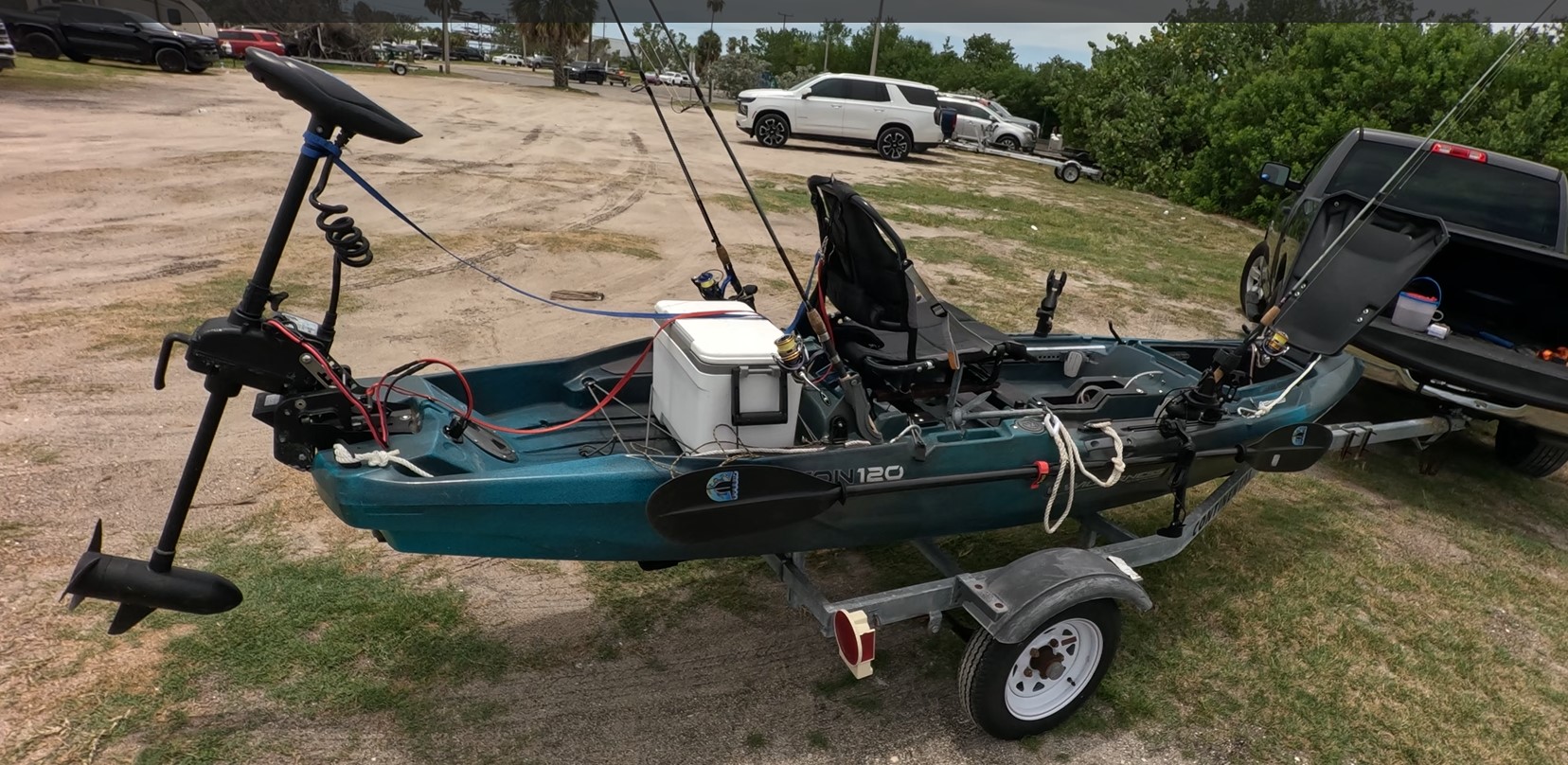
I researched a stack of fishing kayaks before landing on the Recon 120. The deciding factor was not just the deck layout, the seat, or brand loyalty. The deciding factor was that I intended to mount a trolling motor and let the kayak handle the two-mile haul, saving my arms for fishing.
I run a Haswing remote-controlled trolling motor on the kayak. With the Group 34 battery, motor, and fishing gear loaded, the kayak is heavy, but the motor gives me about 4 mph. I also get roughly four total hours of trolling motor performance in normal use. I will cover the motor data in more depth in a separate trolling motor review.
I will be straight with you: this one made me open my wallet. My first two kayaks were used and affordable, which is usually how I like to buy outdoor gear. The Recon was the exception. It was real money, and I had to think about it.
After using it, I do not regret the purchase.
“My first two boats were used and cheap. The Recon was the exception — and the one I would buy again.”
Specs That Matter
Specs only matter when they explain how the kayak behaves in real use. For the Recon 120, the big numbers are width, weight, capacity, and whether the boat can support the way you actually fish.
The 38-inch width and 450-pound capacity are part of why this kayak makes sense as a rigged fishing platform. The tradeoff is weight. This is not a featherweight kayak you casually toss around after a long day.
Standing Stability
Stability standing is fantastic. This is a 10 out of 10 category for me.
In calm water, the stability allows me to stand up and sight fish while I am trolling with the Haswing remote-controlled trolling motor. That changes how I fish. I can see more water, work an area more slowly, and change body position during a long day.
This matters because standing stability is not just about casting. It is also about comfort and fatigue. After several hours in a kayak, being able to safely stand up and reset your back, legs, and hips is a real advantage.
Tracking and Paddling
With the additional weight of the Group 34 battery, the trolling motor, and all of my fishing gear, the kayak is pretty heavy for paddling.
The high seat also changes the paddling feel. Because I am sitting higher above the water, paddling is more challenging than it would be if I were sitting down closer to the waterline. You can paddle it, but once it is fully rigged, this is not the setup I would choose if I planned to cover a lot of distance by paddle alone.
The better approach is to be honest about what this kayak becomes once it is rigged. It is a stable, motor-assisted fishing platform. It is not a lightweight paddle kayak.
Storage and Deck Layout
I love the front “trunk” area. It is useful for mounting and securely storing the battery, tools, dock line, and other gear that I want contained and protected.
The platform area in front of the seat is good, but I do not use the optional pedal drive. Because of that, the opening where the pedals would go is wasted space for my setup. I wish that area were completely flat so I had more usable room for a bait bucket or other loose gear.
That does not ruin the layout. My tackle pack sits nicely up out of the water on the bottom of the kayak, and the overall deck still works well for the way I fish. But if I were designing the boat only for my use, I would rather have a full flat deck in that center area.
Motor Performance
With the battery, motor, and gear loaded, the kayak is heavy, but the Haswing trolling motor performs well. I get about 4 mph out of the motor, and I get roughly four total hours of trolling motor use.
I had to run wiring from the front battery compartment to the rear and install a trolling motor receptacle. That is why I do not rate the motor-ready setup as a perfect 10. The kayak supports motor use well, but the final rigging still requires some planning and installation work.
I will cover the motor, battery, wiring, receptacle, and actual runtime data in a separate review. For this kayak review, the important point is that the Recon 120 makes sense as a motor-assisted fishing platform.
Comfort Over a Full Day
The seat has been very comfortable, even after an eight-hour day on the water.
Being able to stand safely helps because I can change position during the day instead of sitting in one posture the entire time. If someone needed a little more padding, a seat cushion could be added, but I have not found the seat to be a deal-breaker.
The bigger comfort issue is not the seat. It is what happens after the trip, when the kayak is loaded with gear and needs to be moved back to the trailer.
Representative Retail Build Cost
This is not a cheap rig once it is set up the way I use it. The numbers below are representative current retail pricing and should be checked against your actual receipts, sales, shipping, tax, and the exact motor and battery selected.
| Item | Representative Retail Cost | Practical Note |
|---|---|---|
| Wilderness Systems Recon 120 | $1,619.00 | Base kayak price from a current Wilderness Systems dealer listing. |
| Wilderness Systems Transom Motor Mount | $139.99 | Needed to mount a clamp-on trolling motor to the stern. |
| Haswing Cayman-Series Remote Trolling Motor | From $619.00 | Representative Haswing remote-controlled 12V 55 lb transom motor pricing. |
| Group 34 AGM Marine Battery | $230.26 | Representative Group 34 AGM marine battery example. |
| Wilderness Systems Heavy-Duty Kayak Cart | $189.99 | Important for moving the loaded kayak from trailer to launch. |
| Representative Total | $2,798.24 | Does not include tax, shipping, wiring, receptacle, charger, trailer, or miscellaneous rigging. |
Even with the added cost of the kayak, transom mount, motor, battery, and heavy-duty cart, I still think the setup is worth it for how I use it.
The Real Negative: Transporting It
The only real negative is how manageable the kayak is to transport once it is fully rigged.
With the added weight of the battery and motor, this kayak is too heavy for me to treat like something I would put on top of a vehicle or casually load into the bed of a truck. I use a trailer to transport it, and whenever possible I launch at a boat ramp to avoid having to lift the kayak.
There are times when I launch from kayak launches without a ramp. That requires lifting the kayak off and back onto the trailer, and it is heavy. The Wilderness Systems heavy-duty cart helps, but it has its own challenge. One end of the kayak has to be lifted about shoulder high to clear the cart rails and sit properly.
I have made some DIY tools to help with that problem, including adding PVC pipes to the rails of the cart to reduce the angle and height needed to load the kayak. That helps, but it does not make the kayak light.
It is also quite an effort to push or pull the kayak on the cart, especially after a long day on the water. My practical recommendation is simple: use a trailer and launch at a boat ramp whenever possible.
What I Like and What I Would Change
What I Like
- Fantastic standing stability in calm water.
- Handles rough chop better than expected.
- Comfortable seat, even after a long day.
- Excellent platform for a remote-controlled trolling motor.
- Front trunk area works well for battery, tools, dock line, and gear.
- Enough capacity and deck room to function as a real fishing platform.
What I Would Change
- I wish the unused pedal-drive opening were a flat deck area.
- The fully rigged kayak is heavy to paddle.
- The high seat makes paddling more challenging than a lower kayak seat.
- Transport is the biggest downside once the battery, motor, and gear are added.
- The heavy-duty cart helps, but loading the kayak onto the cart still takes effort.
My Field Ratings
These ratings are based on real use with the Recon 120 rigged the way I fish it: Haswing remote-controlled trolling motor, Group 34 battery, fishing gear, trailer transport, and Gulf Coast inshore conditions.
Watch the Field Test
Add the YouTube field test here once it is filmed. The video should show the launch, the trolling motor setup, the kayak loaded for real fishing, how it handles chop, and what transport looks like after a long day.
The Bottom Line
The Wilderness Systems Recon 120 is not the kayak I would tell someone to buy if they just want a cheap way to paddle around on weekends. It is too heavy, too purpose-built, and too expensive for that.
But if the real problem is fishing range, gear capacity, standing stability, comfort, and building a motor-assisted kayak fishing platform, the Recon 120 makes a lot of sense.
My verdict is no longer waiting on more testing. I have had enough time on the water to judge it. The kayak is fantastic as a fishing platform, excellent with a motor setup, and very comfortable over a long day. The only major downside is transport. Once you add the battery, motor, and gear, you need a practical plan to move it.
For my use, the setup is worth it. I would buy the Recon 120 again, but I would tell the next person the truth before they buy one: budget for the whole rig, plan on using a trailer, and launch from a boat ramp whenever you can.
Disclosure: Paddlefire Outdoors may earn a commission from links in this review, at no extra cost to you. We only recommend gear we have actually used or are actively testing in the field. This review reflects practical field experience in Florida Gulf Coast conditions.