Minn Kota Talon 12' Review on a Pontoon Boat | Game Changer?
I installed a Minn Kota Talon 12-foot shallow water anchor on my pontoon boat because I was tired of handling a traditional anchor every time I wanted to stop and fish. After using it in real Florida Gulf Coast conditions, my answer is simple: it is not perfect, but it has changed the way I use the boat.
Quick Take
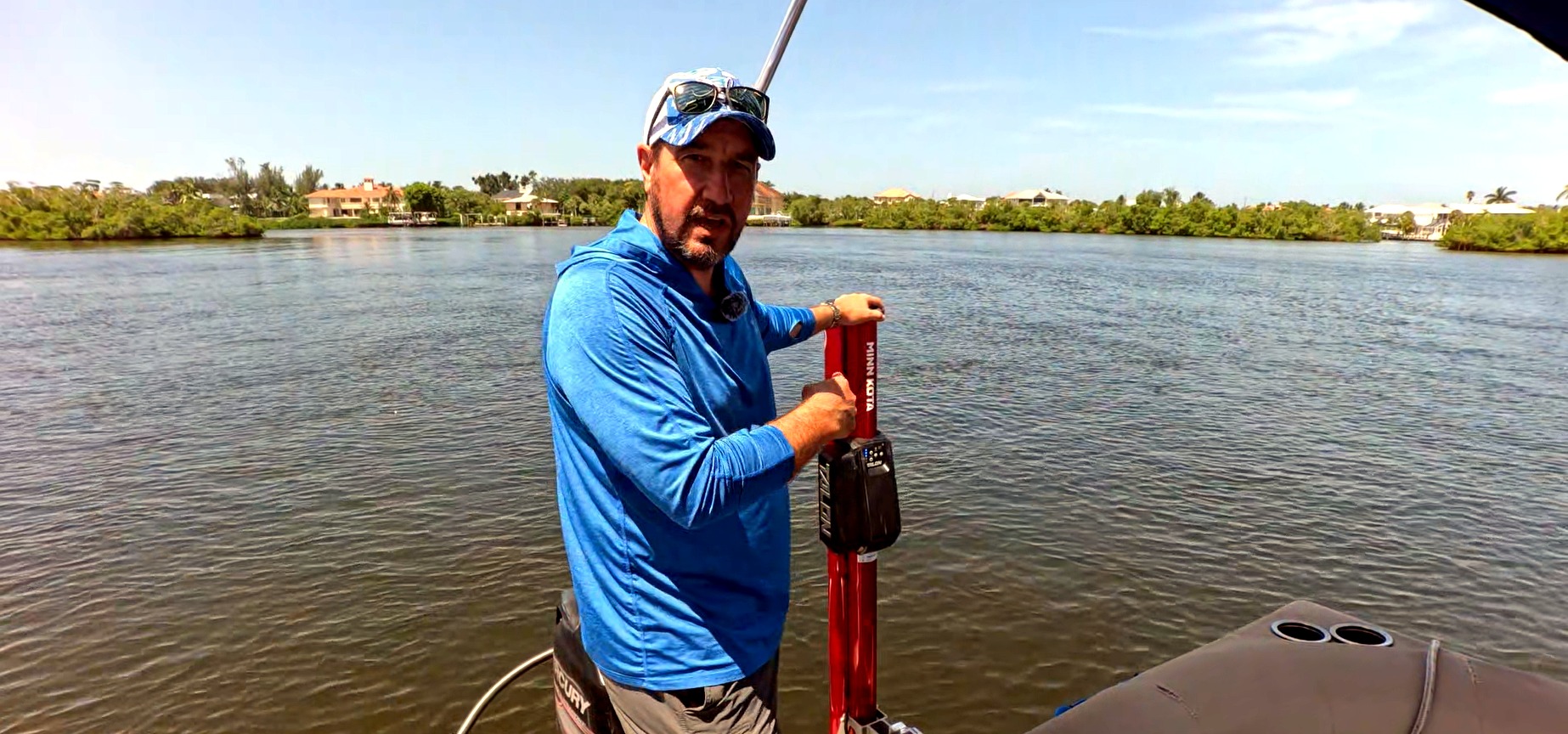
The Minn Kota Talon 12-foot shallow water anchor is a major convenience upgrade over a traditional anchor, especially on a pontoon boat. I can pull into a fishing spot, press a button, and hold the boat in place without dragging out the bow anchor, rope, and chain every time I want to stop.
The practical limitation is depth. Even though this is a 12-foot Talon, I do not treat 12 feet as the real-world everyday anchoring depth. In my use, the Talon is strongest when it has enough remaining spike length to dig securely into the sand. Around 8 to 9 feet of water is where I feel much better about the hold.
Overall Rating: 8/10
The Practical Problem
The issue with anchoring a pontoon while fishing is not that a traditional anchor does not work. It works. The problem is how much effort it adds every time you move.
Before installing the Talon, stopping on a fishing spot meant pulling out the anchor, dropping it, hoping it grabbed, watching the boat swing, and then pulling everything back up when it was time to move. If the first spot was not producing, the whole process started over again.
That gets old fast. It is especially annoying when you are working shallow water, trying to fish multiple spots, beaching the boat, or moving with the tide and wind.
The Talon solves that part of the problem. It does not replace judgment, and it does not turn deep water into shallow water, but it makes short stops and controlled shallow-water anchoring much easier.
What the Minn Kota Talon Is
The Minn Kota Talon is a vertical shallow water anchor. Unlike a Power-Pole style anchor that swings out and down, the Talon deploys straight up and down. On a pontoon, that matters because the anchor stays tight to the boat and does not swing out behind the deck.
The model I am using is the 12-foot Talon. Minn Kota lists the 12-foot model with 3-stage vertical deployment, auto up/down, a wireless remote, LED deployment indication, built-in floating suspension, deployment notification, and a built-in work light.
My Pontoon Setup
My Talon is mounted to the pontoon using Minn Kota mounting hardware and a tilt bracket. The tilt bracket is important on this setup because the Talon is tall when it is vertical.
When I am using the anchor, the Talon stands upright. When I am underway or trailering, I can pull the lever, pivot the Talon forward, and lay it down. I use a bungee strap to secure it in the lowered position during transit.
In practical terms, that makes the setup usable on a pontoon. Without the ability to tilt the Talon down, height and storage would be a bigger problem.
Products Used in This Setup
These are the main pieces used in my Talon setup. The links below are Amazon affiliate links and open in a new tab.
Minn Kota Talon Shallow Water Anchor
This is the main shallow water anchor. It deploys vertically and holds the pontoon in place when the water is shallow enough for the spike to dig into the bottom.
Check Price on AmazonMinn Kota Talon Tilt Bracket
The tilt bracket lets the Talon pivot forward and lay down during transit. On my pontoon, this is a major part of making the Talon practical.
Check Price on AmazonMinn Kota Talon Pontoon Mount
The pontoon mount is the mounting hardware used to attach the Talon to the pontoon setup. My installation was straightforward and did not require a complicated custom project.
Check Price on AmazonMinn Kota Talon Foot Control
The foot control gives another way to operate the Talon from the boat. I bought it for future use at the front of the pontoon while fishing with a trolling motor.
Check Price on AmazonMinn Kota Talon Remote
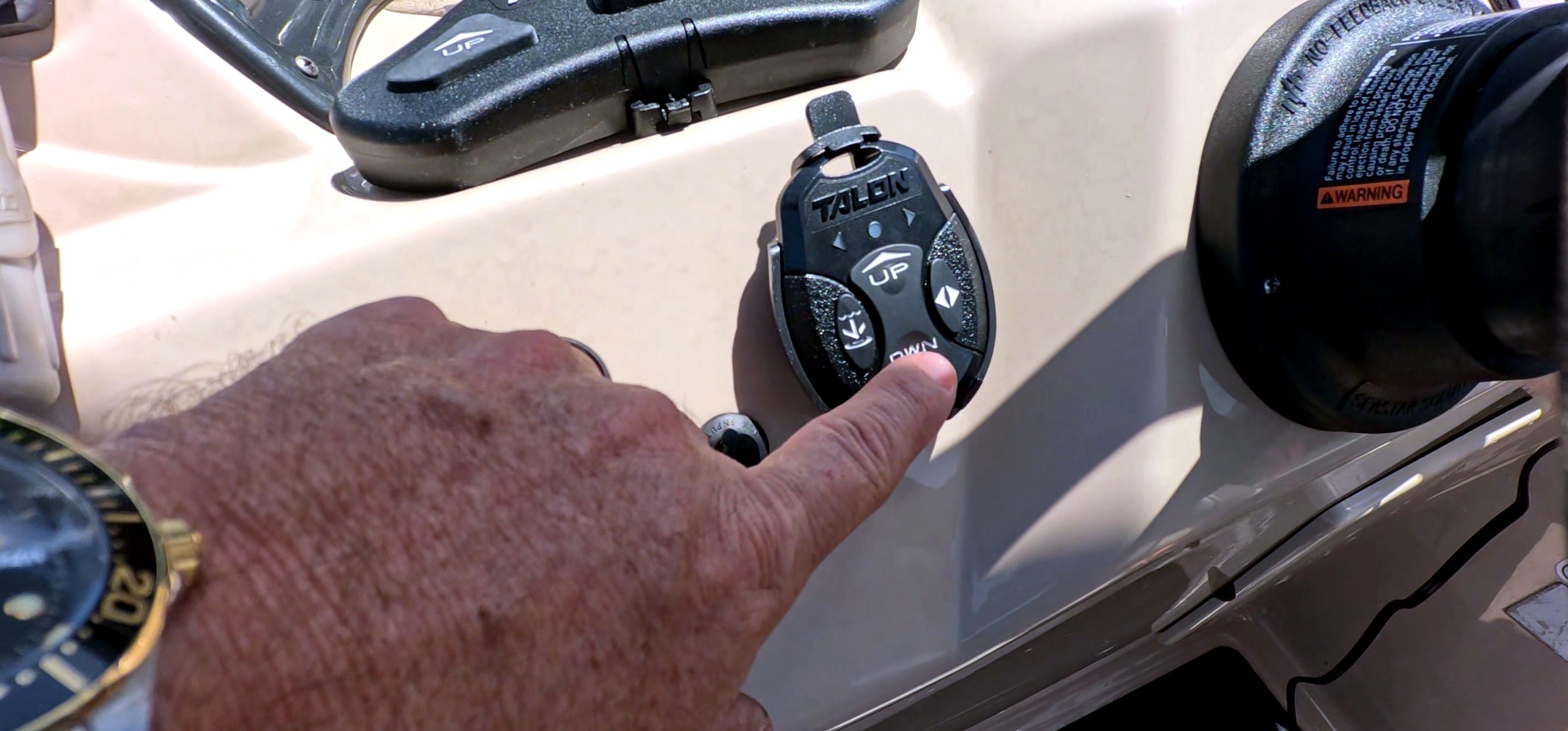
The handheld remote lets me raise and lower the Talon away from the main control panel. One feature I like is that the down command requires a double press, which helps prevent accidental deployment.
Check Price on Amazon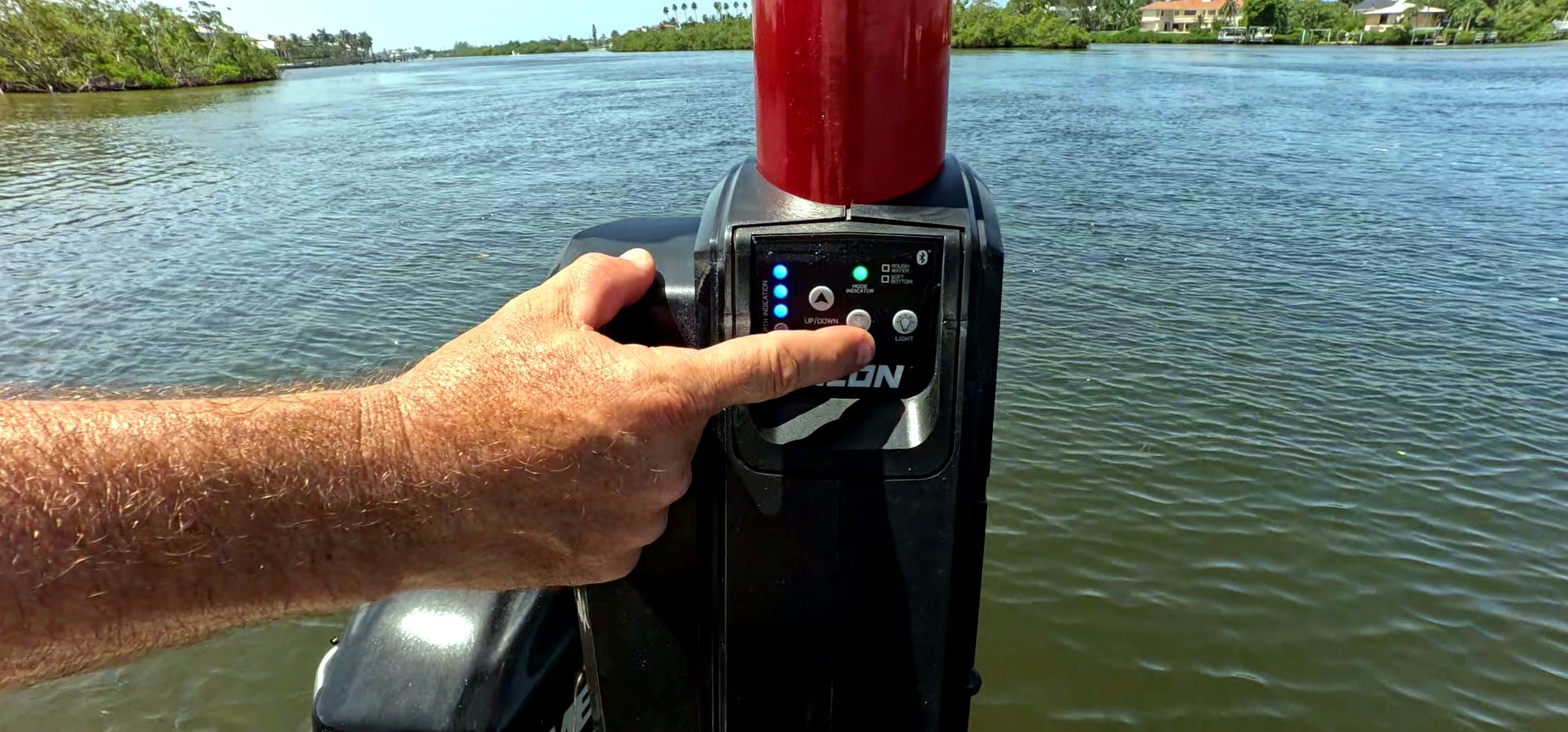
Controls and Rough-Water Mode
The control panel on the Talon is simple. You have up and down controls on the unit itself, rough-water mode, and a light function. The unit also comes with a handheld remote.
The rough-water mode matters because a pontoon moves with wind, chop, and boat wake. When there is wave action, the Talon can adjust and keep pressure on the bottom so the boat does not simply disconnect from the anchor point as the stern rises and falls.
In the video test, you can hear the Talon working as waves hit the boat. That is the kind of feature that does not sound like a big deal in a product description, but it matters once you are actually sitting in moving water.
Remote and Foot Control
The handheld remote is one of the better parts of the setup. I can raise or lower the Talon without standing at the stern and pushing the buttons on the unit.
One feature I like is the double-press deployment. If I press the up button, the Talon comes up. But to deploy it, I have to press down twice. That is a smart safety feature. On a pontoon with kids, grandkids, gear, and people moving around, I do not want the anchor accidentally deploying while the boat is underway.
I also bought the optional foot control for the front of the pontoon. My plan is to use it when I eventually add a bow trolling motor. The idea is simple: fish from the front, control the trolling motor, and still operate the Talon without walking to the back of the boat.
I have not used the foot control much yet because I have not selected the trolling motor setup, but the control option makes sense for how I plan to fish the pontoon.
Depth: Where It Works Best
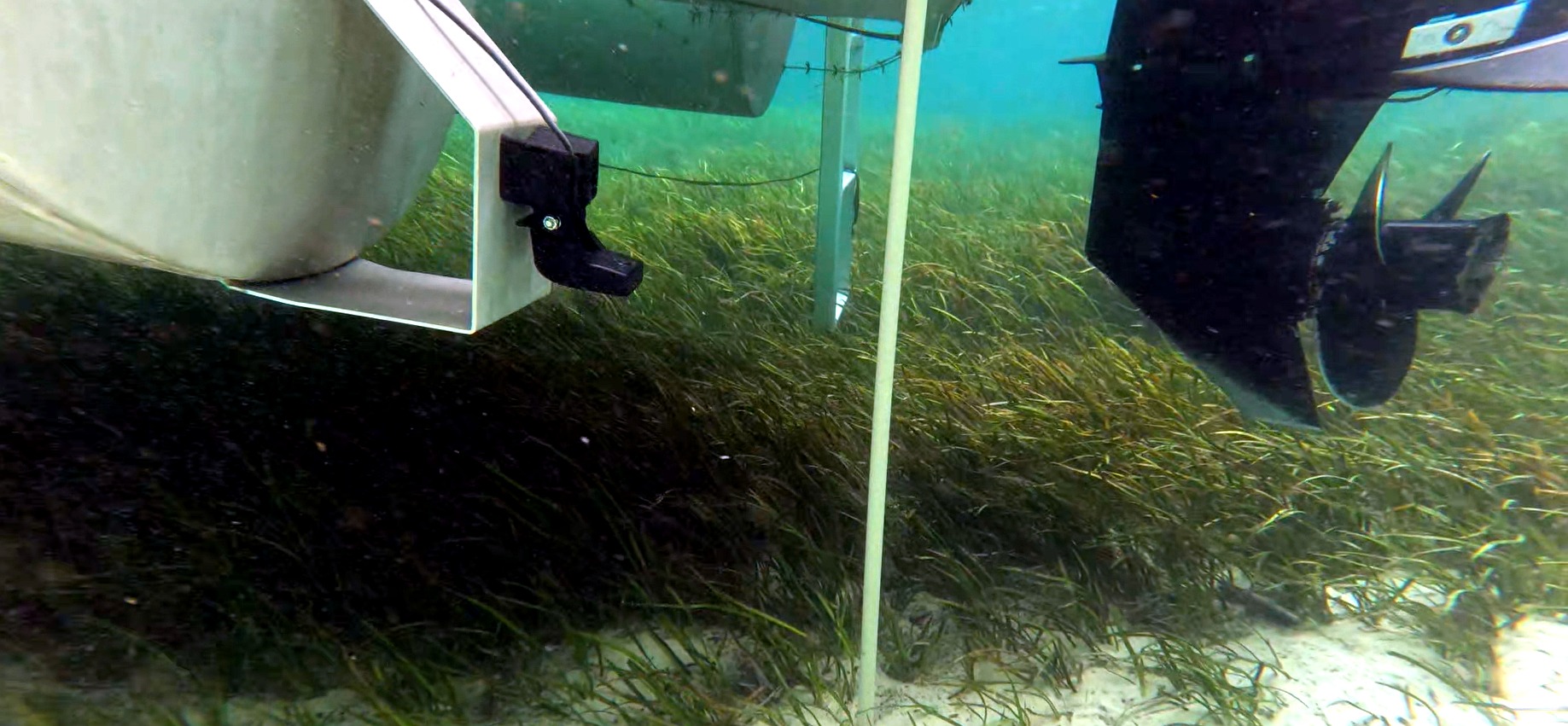
The Talon I use is the 12-foot version, but I do not consider 12 feet to be the practical everyday holding depth on my pontoon.
In my use, the anchor works best when there is enough spike left to penetrate and hold in the bottom. If I am in 5 to 8 feet of water, I feel good about it. Around 9 feet, it can still hold, but that is where I start paying closer attention. Once you get into 10, 11, or 12 feet of water, there is less anchor left to bite into the sand, and the hold becomes less dependable.
That is not a complaint as much as it is a practical operating point. A 12-foot shallow-water anchor still needs bottom penetration. The listed length is not the same as the depth where I would blindly trust it in all conditions.
Fishing Use
For fishing, the Talon has been a game changer.
Before the Talon, moving from spot to spot was more work. Drop the anchor, wait for it to grab, fish the spot, pull the anchor, clean up the rope, move, and repeat.
With the Talon, I can pull up to a shoreline, flat, mangrove edge, dock line, or sand hole and stop with a button. If the spot looks good, I stay. If it does not, I raise the Talon and move.
That changes the rhythm of fishing from the pontoon. It keeps me fishing instead of constantly managing anchor line.
Beaching the Pontoon
The Talon has also been useful when beaching the boat.
I can pull the bow or pontoons onto the sand, drop the Talon, and help keep the boat from drifting or swinging as much. In the right conditions, that makes a beach stop much easier.
That does not mean I ignore wind, tide, wake, or bottom conditions. It still requires judgment. But the Talon gives me another point of control without having to immediately deal with a traditional anchor.
Boat Camping Use
One of the underrated uses has been boat camping.
When I am sleeping on the boat, movement matters. I can use a traditional bow anchor and then drop the Talon at the stern. That helps keep the boat more stationary overnight.
In practical terms, that makes the boat feel more settled. It is not just a fishing tool. It is also useful when I want the pontoon to stay put while relaxing, camping, or spending time near shore.
Installation
My installation was straightforward. The pontoon mount and bracket setup attached to the boat with a few bolts, and I did the install myself.
The install was not the hard part. The more important decision is choosing the right mounting location so the Talon can deploy cleanly, tilt for storage, clear the boat, and work with how you actually use the pontoon.
It is worth noting that pontoon layouts vary. Deck framing, rail layout, engine clearance, swim platforms, ladders, and seating can all affect the final mounting decision.
What I Like and What I Would Watch
What I Like
- Push-button anchoring is much easier than handling a traditional anchor at every fishing stop.
- Vertical deployment keeps the anchor tight to the boat.
- Rough-water mode helps the anchor stay engaged as the boat moves in chop.
- The remote is convenient and includes a useful double-press down safety feature.
- The tilt bracket makes the Talon practical for transport and storage on a pontoon.
- It works well for fishing, beaching, and boat camping.
- Installation was straightforward on my setup.
What I Would Watch
- The full 12-foot rating should not be treated as the everyday practical holding depth.
- In deeper water, there is less spike left to dig into the bottom.
- Bottom type matters. Sand, grass, mud, shell, and hard bottom will not all hold the same.
- Wind, current, and pontoon side area still affect how well the boat stays put.
- The system is a convenience upgrade, not a replacement for judgment.
My Field Ratings
These ratings are based on my use of the Minn Kota Talon 12-foot shallow water anchor on a pontoon boat in Florida Gulf Coast conditions.
Who This Setup Is For
This setup makes sense for pontoon owners who fish shallow water, beach the boat, move often, or want an easier way to hold position without constantly handling a traditional anchor.
It also makes sense if you use your pontoon for more than cruising. If the boat is a fishing platform, family beach boat, sandbar boat, or boat camping setup, the Talon adds real convenience.
It is especially useful when you are fishing water that is shallow enough for the Talon to get a solid bite into the bottom.
Who Should Think Twice
I would not recommend buying a 12-foot Talon and assuming it will hold perfectly in 12 feet of water under all conditions. That is not how I use it.
If most of your anchoring is in deeper water, strong current, hard bottom, or open exposed water, a traditional anchor may still be required. The Talon is a shallow-water tool, and it works best when used that way.
I would also think carefully about the mounting location before buying accessories. Pontoon boats vary enough that the bracket setup matters.
Final Verdict
The Minn Kota Talon 12-foot shallow water anchor has been a major upgrade on my pontoon boat.
It makes fishing stops easier, beaching simpler, and boat camping more stable. The remote, control panel, tilt bracket, and rough-water mode all add practical value. I like that I can move from spot to spot without constantly dealing with a rope anchor.
The limitation is depth. Even though this is a 12-foot unit, I trust it most when there is enough spike left to dig into the bottom. For me, that means treating 8 to 9 feet as the more practical working range, depending on conditions.
That does not make it a bad product. It just means the owner still needs to understand what it is. It is a shallow-water anchor, not a magic hold-anywhere system.
Overall Rating: 8/10
Would I buy it again? Yes. For how I use my pontoon, absolutely.
Disclosure: Paddlefire Outdoors may earn a commission from links in this review, at no extra cost to you. We only recommend gear we have actually used or are actively testing in the field. This review reflects practical field experience in Florida Gulf Coast boating, fishing, beaching, and boat camping conditions.