Dakota Boat Retriever 1200L Review: Helpful Solo Pontoon Launch Tool, But Not a Substitute for Judgment
I bought the Dakota Boat Retriever 1200L to help launch my SUN TRACKER PARTY BARGE 18 DLX alone. It worked very well at first. Over time, saltwater use, wind, current, and how hard the boat comes off the trailer have shown where the product helps and where the operator still needs to stay ahead of the boat.
The Practical Problem
The issue is simple. Launching a pontoon alone can be awkward, slow, and a little risky if the ramp is busy, wet, or exposed to wind and current.
A pontoon is not hard to operate once it is in open water, but the launch process is different. You are dealing with a truck, a trailer, a floating boat, a dock line, ramp traffic, and your footing at the same time. If the ramp is slick or the dock is not close to the trailer, the whole process can turn into a balancing act.
That is why I bought the Dakota Boat Retriever 1200L. I wanted a cleaner way to launch my pontoon alone without climbing around the trailer, getting wet feet, or trying to control a loose boat while also parking the truck.
My Boat and Setup
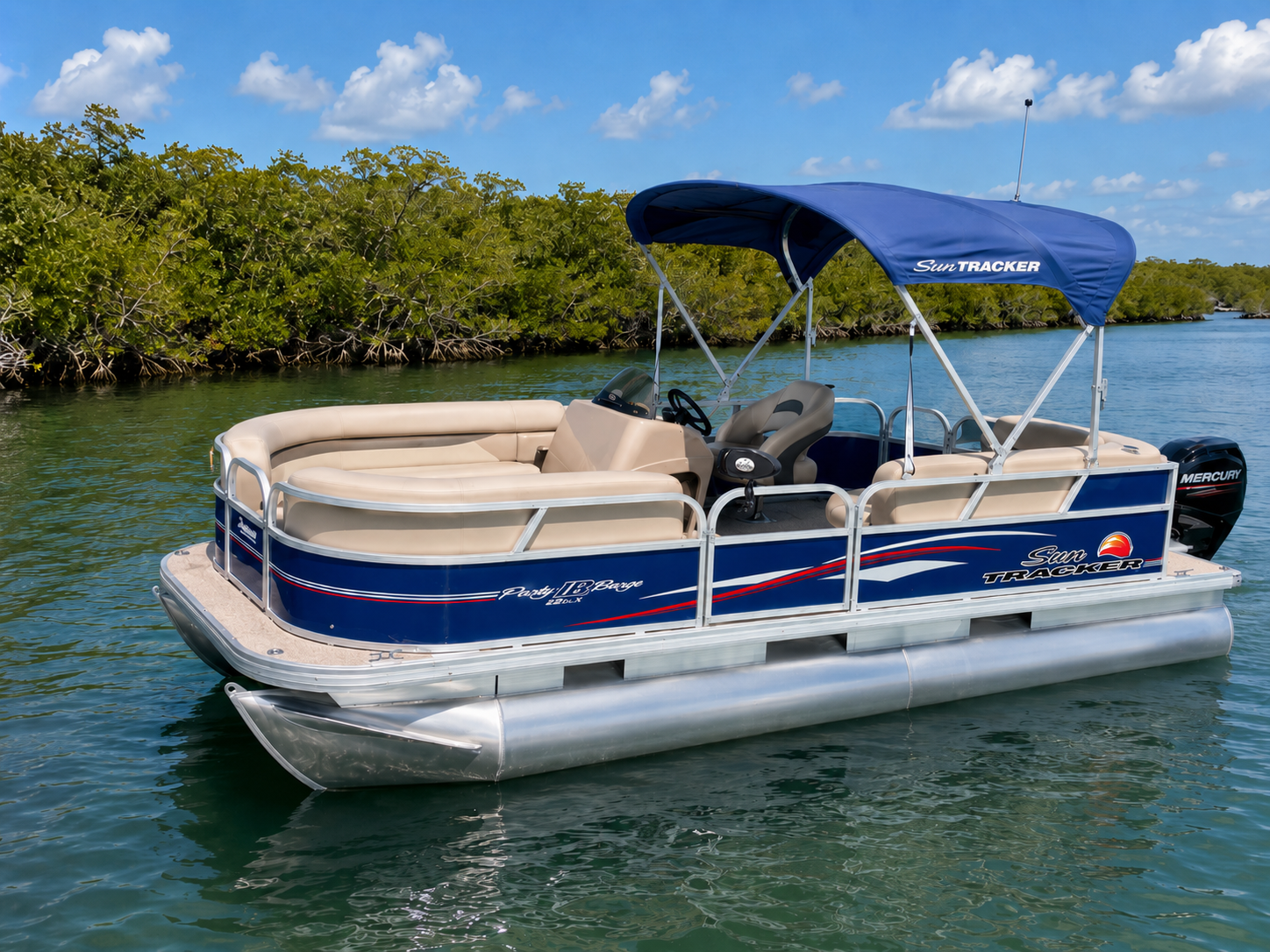
My boat is a SUN TRACKER PARTY BARGE 18 DLX. Even though it is commonly thought of as an 18-foot pontoon, the current published specifications list it as a 20-foot overall boat with a 17-foot 8-inch deck and an 8-foot 2-inch deck width.
What I Bought
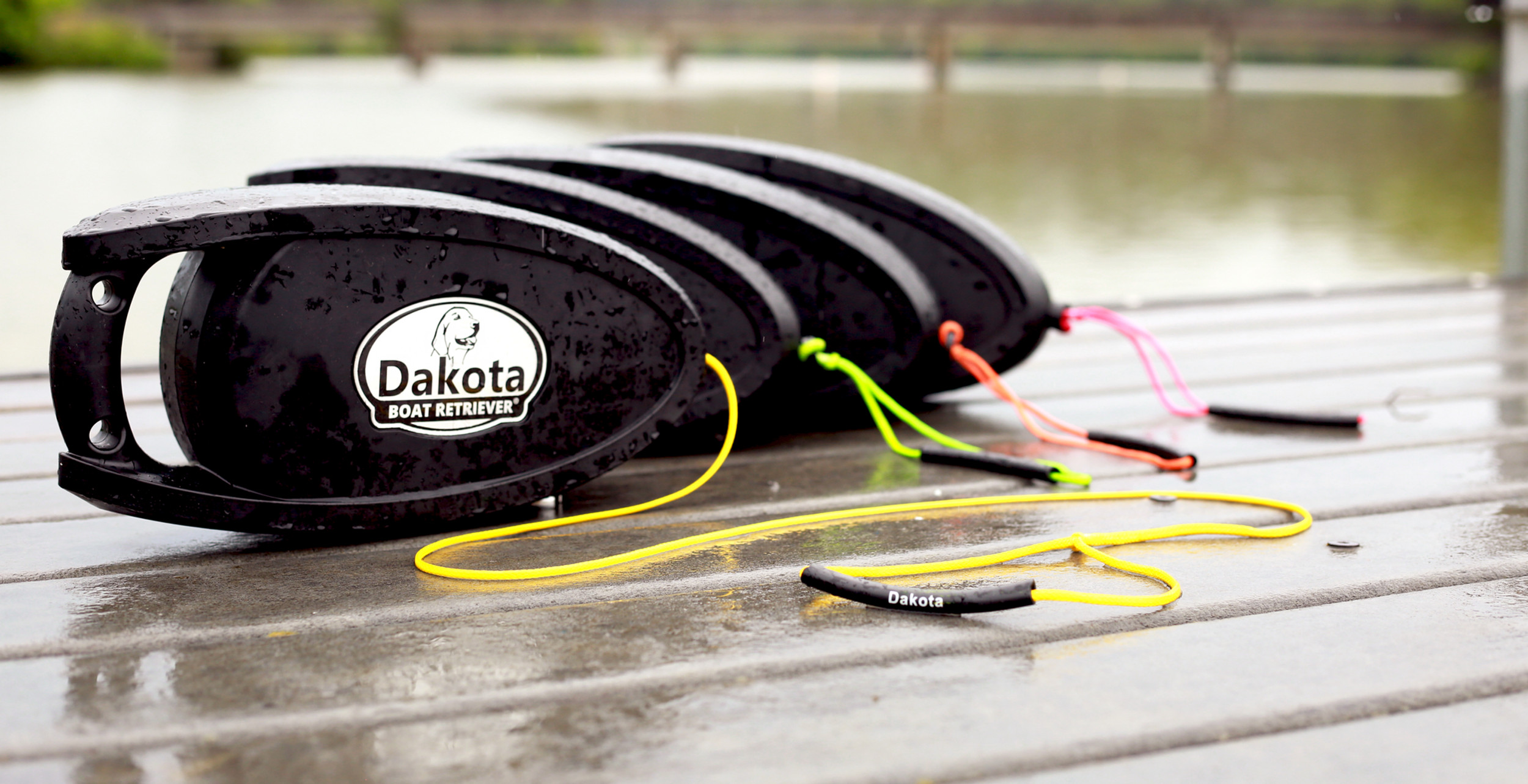
I purchased the Dakota Boat Retriever 1200L for $359. I also bought the Dakota Scotty Adapter for $25 and the Scotty #412 Extender Arm, 3-inch, for $19. That put my total setup at about $403 before tax or shipping.
The adapter setup lets me mount the Dakota Retriever to the rail of the pontoon. That is important because a pontoon does not have the same bow layout or seat pedestal arrangement as many fishing boats.
How I Use It
My solo launch process is straightforward.
I connect the Dakota Retriever cord to a dock piling. Then I back the pontoon into the water until it is floating. Once the boat is buoyant, I short-stop the vehicle and trailer, essentially bumping the boat off the trailer.
At that point, I can pull forward, park the truck and trailer, and let the Dakota Retriever slowly pull the pontoon back toward the dock.
When it works correctly, it is a very good system. The first dozen times I used it, it worked almost exactly the way I hoped it would. The boat came off the trailer, stayed connected to the dock piling, and slowly worked its way back to the dock while I parked.
For that part of the job, the Dakota Retriever did what it was supposed to do.
Where It Works Well
The Dakota Retriever is at its best when the launch is controlled.
By controlled, I mean the boat floats off the trailer without being shoved hard into open water. The dock is close enough for a reasonable line angle. Wind and current are not pushing the pontoon hard away from the dock. The ramp lane is not crowded with other boats waiting.
Under those conditions, the Dakota Retriever is a useful solo-launch tool. It gives the boat a controlled return path while the operator parks the vehicle. That is the practical value.
It also reduces the chance of doing something dumb on a slick ramp. Anyone who launches alone knows the routine. You are trying to manage the truck, trailer, dock line, boat, ramp traffic, and your footing at the same time. The Dakota Retriever does not eliminate all of that, but it does simplify part of the process.
What Changed Over Time
My concern is that the unit does not seem to pull the pontoon back with the same confidence under less-than-perfect conditions as it did when I first bought it.
Lately, if I bump the boat off the trailer too hard, or if there is a strong current or wind pushing out from the ramp, the retriever sometimes struggles to bring the boat back to the dock. The cord remains attached to the dock piling, but the pontoon may float sideways in the ramp lane or push out beyond the dock before the retriever gains control.
That is not a failure every time, but it is enough that I now pay close attention to the conditions before trusting it completely.
I do not know yet whether the spring mechanism has loosened with use, whether it needs adjustment, or whether this is simply the practical limit of the 1200L on a pontoon in saltwater conditions. The manufacturer describes the Dakota as a spring-driven device, so it is reasonable to wonder whether spring tension, internal friction, mounting angle, rope condition, or corrosion in the bracket could affect performance over time.
That does not mean the product does not work. It means the operator still has to launch with control.
Saltwater Use and Corrosion
I only boat in saltwater, so corrosion matters.
The Dakota Retriever is advertised for marine use, but my experience is that the bracket and mounting hardware need regular attention. The bracket corrodes more easily than I would like, and I have to lubricate it frequently.
This is not unusual for saltwater gear, but it is worth noting because this is not a product you should install and forget. If you use it around Sarasota, the Gulf Coast, brackish ramps, or any saltwater environment, you should expect to rinse it, inspect it, and lubricate the moving or locking points.
The better approach is to treat the Dakota Retriever like other marine hardware. Rinse it after use. Keep the bracket moving freely. Watch for corrosion around the adapter, extender arm, rail mount, fasteners, and any contact points where dissimilar metals may be working against each other.
Using It With Another Person
When I launch with my spouse, I still use the Dakota Retriever, but I also have her hold the front dock line.
That front dock line is not there because the Dakota is useless. It is there because it gives us a backup if the retriever does not fully pull the boat back to the dock under the load of wind, current, or an imperfect launch.
That is probably the smartest way to use this product with a pontoon. Let the Dakota do the work, but do not treat it as the only thing standing between your boat and an open ramp lane. With a pontoon, the front line gives you a second point of control.
What Other Reviewers Said
Other owner comments are generally positive. Dakota-hosted user reviews include boaters saying the retriever makes solo launching easier and that it performs as shown in the company videos. Some owners specifically mention frequent solo launching, wind, moving water, and larger fishing boats.
It is worth noting that the strongest positive reviews are hosted by Dakota on its own website. That does not make them false, but it does mean they should be read with that context.
Boating forum comments are more mixed. Some boaters look at the product and say they already launch alone without needing it. Others compare the idea to using a long rope or a retractable lead. There are also comments from boaters who see the value in windy ramp conditions or for people who launch alone often.
That matches my experience fairly well. If you are already efficient launching alone, and your ramps are protected, you may see the Dakota Retriever as expensive for what it does. But if you launch alone often, especially with a pontoon, it can solve a real problem.
The Practical Limitation
The Dakota Retriever does not replace boat handling.
That is the main point.
It is a controlled retrieval aid, not an automatic docking system. If you launch too hard, let the boat get too much sideways momentum, or use it in wind and current that exceed what the spring can overcome, the boat can still drift into a poor position.
A pontoon makes this more noticeable because it catches wind. My SUN TRACKER Party Barge is not overly heavy by pontoon standards, but it has enough side area that wind can push it around. The Dakota 1200L can work well with it, but the margin gets smaller when the ramp conditions are not favorable.
- I try not to bump the boat off the trailer harder than necessary.
- I check wind and current direction before assuming the retriever will pull the pontoon straight back to the dock.
- If someone is with me, I still use a front dock line as a backup.
- After saltwater use, I rinse and lubricate the mounting bracket and adapter points.
What I Like and Do Not Like
What I Like
- It makes solo launching more manageable.
- It helps reduce climbing, balancing, and wet-ramp awkwardness.
- It worked very well during my first dozen launches.
- It does not require batteries.
- It gives the boat a controlled return path when the conditions are reasonable.
What I Do Not Like
- It is sensitive to hard bump launches.
- Wind and current can overpower the setup on a pontoon.
- The bracket needs frequent attention in saltwater.
- The 1200L may be close to the practical limit for an 18-foot class pontoon in exposed conditions.
- The final installed cost is higher once adapters are included.
My Field Ratings
These are not lab ratings. They are based on using the Dakota 1200L with my SUN TRACKER PARTY BARGE 18 DLX in real saltwater ramp conditions.
Final Verdict
I would still recommend the Dakota Boat Retriever, but not blindly.
For a solo boater with a small fishing boat, bass boat, or protected-ramp pontoon, it can be a very useful tool. For my SUN TRACKER PARTY BARGE 18 DLX, the Dakota 1200L has been helpful and, at times, exactly what I needed.
However, I would not describe it as a set-it-and-forget-it solution for saltwater pontoon launching.
The owner still needs to decide whether the ramp conditions, boat size, current, wind, and mounting location make sense. You still need to launch smoothly. You still need to use judgment. You still need to maintain the hardware, especially in saltwater.
My honest take is this: the Dakota Retriever is a good product with real value, but its performance depends on controlled use. It helped me launch my pontoon alone, and when conditions are right, it works very well. But on a pontoon, in saltwater, with wind or current pushing away from the ramp, I would treat it as a helpful launching aid — not the only line of defense.